|
Phoenix Press Publishing About Us
|
|
A New Type of Publishing
The Future of Publishing
A Publishers View of the Book Business |
Phoenix organizes the proof-reading and editing of typescripts, professional typesetting, ebook formatting and global listing. |
|
A NEW WAY OF PUBLISHING FOR
THE 21ST CENTURY
|
| |
A New Type Of Publishing |
| Phoenix is just one response to the vast array of opportunities that have opened up for writers to regain control of what they create and produce. Massive change is underway in the field of publishing, brought on by a combination of new technology and the waning of medieval publishing industry practices that looked upon the writer as its 'text provider'—its underpaid sweatshop employee. The revolution started with the advent of personal computers, was fuelled by the digitalization process of images, exploded with the Internet's global coverage, and took off like a rocket with the emergence of ebooks and distribution outlets for them like Amazon.com. If the invention of printing took the world by storm, these five revolutions colluded to change the landscape of communications in a way never ever experienced in all of human history. The upshot of is all is liberation for readers and the writers who service them. Readers will gain access to 900% more writer's output or product. The ranks of published authors will swell by that same ratio. The old way of publishing had constraints placed on throughput that the current technological revolution has simply swept away. |
 |
|
| |
|
|
 |
It's true that writers' output won't increase in quality in the short term, but it is true that readers will have a lot more works to choose from and will find stuff they never thought possible to buy before. So while readers will go on buying what they want out of the choice available, ensuring the same sort of quality control, what will change is who carries out the quality control. A new collaboration between writer and his audience is now a reality, with most of the middlemen made redundant to a certain extent. Many writers are teaching themselves the crafts of typography, graphics, ebook formatting as well as video promotion and viral marketing. This makes them truly independent. Phoenix Press started life recently as a modest co-operative between two authors looking to have their manuscripts processed for listing with Amazon and its competitors and print-on-demand (POD) hard copies. That number has expanded to four recently, and will go on growing. |
|
| |
|
|
If it's true that some publishers or retailers go bust, it's not anywhere near as common as the struggling artist on welfare living in a rat-hole. There's certainly no record of even one spending thirty years learning the trade in the hope he might be the one in ten thousand to make a living out of his pen. Why is the writer's plight so bloody terrible? The straight no-BS answer is that it's one of those areas of human productivity that just isn't deemed to be worthy of reward by the business-minded 'suits' in the publishing 'fraternity'. Even successful writers get paid in Dynamic Lifter (a processed form of fowl excrement). Business suits are suspicious of creators. They don't act like Pavlov's dogs, you see. And they're easy to rip off. The master-slave relationship really came about because writers weren't in charge of the means of production. Business people got hold of that because all it took was money and craft – not art. It's these middlemen who get 93% of the cake baked by the poor stupid writer/artist. "In my opinion," says Laurence Kyneton (aka Larry Kynne), "every writer is going to have to do what we're doing if he/she wants to get off the publisher's and retailer's gravy train merry-go-round. Fate, or Good Fortune – call it what you will - has just provided them with the means to do it, through the eBook and POD (print on demand) market with outlets like Amazon and others. The pros and cons of it are all but settled, and the writing is on the wall for the traditional processors of books. Writers are going to reclaim the reward for their time, energy, application and talent. Bludgers beware!"
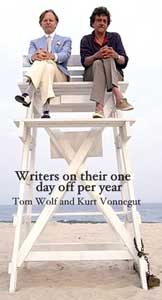
For an idea of the commercial decisions writers today face, have a look at the 'writer as publisher' article (link). The attraction of DIY publishing for writers goes well beyond the promise of recovering their dignity as creative artists or earning more money to compensate for their mostly unpaid efforts. They'll find that their work and ideas aren't being censored by skirted publishing staff who don't understand what they write, or by publishers who want writers to be bound by their irrational fears about offending sacred cows. "No publisher," says G.James Hamilton, "wanted to know about my indirect frontal assault on the Catholic Church with my The Far Country trilogy. To me, an indifferent or dismissive publisher is investing heavily in redundancy and is already reaping what he's sown. One told me to get an agent 'in the first instance'. I replied that I don't want one. Why would I not want one? Because between them and publishers, they've taken over the business – our business, not just of supplying our material to our readership, but determination of what gets published and what doesn't. That enormous power is rapidly evaporating and winging its way back to where it rightly belongs. And what this insulting publisher wanted me to do was pay a third party to do what publishers used to do as part of their percentage. All the work and the costs were being dumped on the poor idiot creating all the wealth and who got the smallest, pathetic return. Does this speak of leaches and parasites or what? |
 |
|
| |
|
|
|
The world wakes up and moves on, and publishing has to follow or die out. To be totally independent, a writer needs to learn all facets of the game, from typesetting, cover design, readying for print to formatting for the various eBook reading devices. If he doesn't, he ought to be able to rely on someone who isn't a vulture to help him get into the market. It's okay to sub-contract what you can't do yourself. Too many writers have become passive and dependent. Why wouldn't the Gordon Geckos of the book publishing world take them for a ride? There may have been an excuse once, but not anymore. Where the writer/publisher has the advantage over the old publishing way is in coverage of the mass market. He and the reader can take a punt where the printed book publisher can't. If an ebook doesn't sell, you try another one, and another. The market is the judge, not the arcane world of the high priests of the publishing industry. It means the reader is getting a look at things no publisher could possibly show him, and a lot more of it than hitherto. That provides a richness and diversity that has disappeared in the publishing world I knew in the sixties. In those days, publishers took a punt on new writers by putting them out as cheap paperbacks. Not anymore. The Ebook is the new cheap pulp fiction that appeared in the 1950s. And in there are going to be diamonds that the traditional publishers throw out in bulk.
Writers will be obliged to show samples of their book and provide de-cent synopses so a purchaser can tell the wheat from the chaff. But at the low prices e-Books sell for, a reader can better take a punt on finding the jewels. Another good thing about EBooks is that they never go out of print. Much valuable knowledge is lost to the world through the fact that printed books go out of print or never get into print. One could see this revolution as Gutenberg, the Renaissance and The Enlightenment all rolled into one. It's absolutely incredible – and it came in our time. The massive changes occurring in this opening up of the book market will be reflected right through society. It'll be a great boost to learning. And it's all happening in the life of these present generations. Nobody in the past lived in such exciting times. |
|
Back to top of page |
|
The Future of Publishing
|
| |
|
|
 |
Something like the Arab Spring that saw the fall of despots in the Middle East and North Africa is gurgling away in the publishing field. The biggest revolution since Gutenberg and the Enlightenment is quietly in progress. When somebody high up the food chain in the publishing world creates a scandal like the one Jason Epstein delivered in his 2001 book Publishing: Past Present and Future, you can be sure that he's being honest and courageous, not just grand-standing. Some would even add treacherous to the list. He told a moribund and stagnant publishing industry what it was determined not to hear—that if it was done well in the past, it's not the case anymore. That was the first insult in what amounted to a volley of them. The salt he then rubbed in was intolerable. He said that all these woes would be put right by the Internet. In other words, the malaise would be cured by a change of personnel, turfing out the suits and the layabouts to bring back the creators and the producers of the product.
|
|
| |
|
|
We have to remind ourselves that this isn't some disgruntled lout in corduroys and rope sandals who'd just had his fifty-ninth rejection of an MS. He was one of the founders of The New York Review of Books, the Library of America, The Reader's Catalogue, editorial director of Doubleday then Random House. In 1952, he created Anchor Books while with Doubleday. His basic thesis is that as the cottage industry of publishing was rationalised by the corporates, profits needed to be made that book-selling couldn't produce.
Instead of book-conscious people running the industry, the bean-counters moved in. Only the blockbuster writers were kept on the list while the bulk of the profession became idle and poor. Books printed any earlier than six months ago were abandoned in favour of the fly-by-night high turnover titles, creating a massive loss of diversity in production. "Between 1986 and 1996," he said, "the share of all books sold represented by the 30 top bestsellers nearly doubled. But within roughly the same period, 63 of the best selling titles were written by a mere 6 writers: Tom Clancy, John Grisham, Stephen King, Dean Koontz, Michael Crichton and Danielle Steel . . ." |
 |
|
| |
|
|
Epstein was one of very few who saw Amazon as a rush of fresh air in a stagnant room. For one thing, they stock large backlists, in recognition of the fact that writers need an income for more than the first six months of the life of their book. Like us at Phoenix, Epstein remembers the 1950's as the Golden Age of book production. And he sees the return of such an age contingent on the digital revolution—the one we're witnessing now, where print-on-demand and ebooks are rapidly becoming mainstream. Books will become cheaper because of cheaper printing and the elimination of most of the middlemen.
Agents are no longer necessary—if indeed they ever really were. They came into vogue when publishers got lazy and shed part of their workload onto agents paid out of the poor author's royalty. So, good riddance agents. All a writer needs now is a freelance editor and help to get the material onto his website. No book needs to be out of print. The effect of this will be to increase dramatically the number of backlist titles available but to increase no less dramatically the diversity and range of new titles written by a newly flourishing writing community. All those quirky authors who never got a look-in at a publishing house can now put their wares on the market and promote them better than a conventional publisher could. No writer will ever again be forced to sign a contract the delivers ownership of his creation into the hands of someone who has no right to it; copyright thieves I call them.
This revolution we're experiencing is freeing writers and books from the prison created by suits keen to make a killing on somebody else's effort and talent. The big amalgamated publishing houses are already collapsing, as Epstein foresaw. And again, good riddance because they were both commercial and cultural failures. Epstein says in his book that "publishing is by nature a cottage industry, decentralised, improvisational, personal; best performed by small groups of like-minded people, devoted to their craft, jealous of their autonomy, sensitive to the needs of writers and to the diverse interests of readers." In a few lines, he's described the atmosphere here at Phoenix. The dominoes are beginning to fall, as Epstein predicted. And there's nothing the biggies can do to arrest the tide, let alone turn it back. For the first time in history, the writer is in charge of his career, his talent, his income and his prospects.
For the first time in his life, he can consider his garret as mere temporary accommodation while he learns his trade. And all this as the publishers pack up their gear to leave the leafy up-market streets their shingles once graced so proudly. Justice is finally served. No longer will the writer have to admit that he belongs to a profession in which he has to keep proving his talent to people who have none.
|
| Back to top of page
A Publisher's View of the Book Business
|
| |
|
|
Jason Epstein is a conventional publisher with vision. Vision, said Jonathan Swift, is the art of seeing things invisible. Epstein wrote a book on the publishing trade. I found it on Amazon. It was instrumental in making me commit myself to the trade, for he saw life emerging from the death of the decaying industry that we've known for three-quarters of a century and more. The full review of the book Publishing: Past, Present & Future (2001) can be read on line at:
www.complete-review.com/reviews/publisher/epst.
Extracts of it are included here as support to the points I wish to make thirty years after Epstein first formulated his prophetic vision. It's not what we'd expect from a man who cut his teeth at Double Day and went on to Random House.
'In its seven chapters Book Business does discuss—as the subtitle suggests—publishing past, present and future. It does so mostly by example, however: Book Business is as much memoir (focussing on Epstein's career) as guide to the publishing industry. Fortunately, Epstein's career has been an interesting one—and he presents it very well. Like André Schiffrin's The Business of Books, which was published at about the same time (and which was often reviewed together with Epstein's book), it traces the author's career while focussing on the changes publishing has undergone—and the possibilities of the future. Epstein writes that twenty years ago (in 1980), he advised his children and their friends "to shun the publishing business, which seemed to me then in a state of terminal decrepitude if not extinction". Surprisingly, he now sees great hope and much excitement, believing we are on the verge of a great and fundamental transformation. |
 |
|
| |
|
|
| 'Like Schiffrin and many others, Epstein believes that the publishing industry has got itself into the horrible state is in today because: "it deviated from its true nature by assuming, under duress from unfavourable market conditions and the misconceptions of remote managers, the posture of conventional business." A book-romantic at heart, he insists publishing is, in fact, not a conventional business: "It more closely resembles a vocation or an amateur sport in which the primary goal is the activity itself rather than its financial outcome." Epstein correctly points out that one reason why the conglomerates that currently dominate publishing in America don't make much money is because they run their businesses so badly.' Another reason, I'd add, is that they've thrown 95% of writers to the wolves, making their product uniform and arid.
'The focus on big bestsellers is the most obvious mistake. Indeed, one of the big mysteries of contemporary publishing is why the biggest names bother using a publisher at all, instead of doing it themselves. Epstein notes that in the period ca. 1986 to 1996 a phenomenal "sixty-three of the one hundred best-selling titles were written by a mere six writers: Tom Clancy, John Grisham, Stephen King, Dean Koontz, Michael Crichton, and Danielle Steel". Publishers generally don't earn money off of these titles—they are loss-leaders which apparently give publishers clout with booksellers etc. The authors still publish with publishers because of the convenience—and because the bloated contracts are a form of insurance: the publisher assumes the risk, not the author. Books by celebrities (ex-presidents, entertainment stars) are another source of huge write-offs, as money paid out is never earned back. |
| |
|
|
| Epstein also points out that backlists can easily be the main (and most reliable) revenue source—but that instead of cultivating these publishers focus their attention on the sexier frontlist titles. All this does not mean publishing is not like other businesses—it just means that many publishers (especially the huge ones) are running their businesses badly. Ambition and hubris gets the better of them. And the pressure for immediate results. It's this—the stock market's insistence on quarterly performance—that is the only things that possibly differentiates publishing from other industries, though arguably there are many other businesses which are similarly disadvantaged (i.e. where growth needs to be carefully fostered over a longer period for good results).
Epstein also focusses on the shift in retailing, in how and where books can be bought. This too brings with it difficulties—while the new technologies also afford new ways of reaching consumers. The parts on The Reader's Catalog are of particular interest, as he suggests why his model (and therefore also Amazon.com's model) was doomed from the start. Epstein expects the role of the publisher to be transformed by the new technologies. There seems some wishful thinking here on his part, as he suggests that "publishing may therefore become once more a cottage industry of diverse, creative autonomous units". (End of extract of review).
Nearly twelve years on, the chickens Epstein prophesized are already coming in by flocks to roost, even the 'ATM-type machines' for print on demand. CdP |
| |
Back to top of page |
|
| |
|
|

